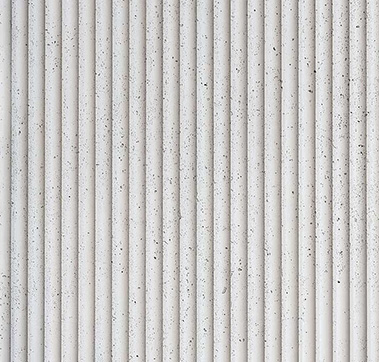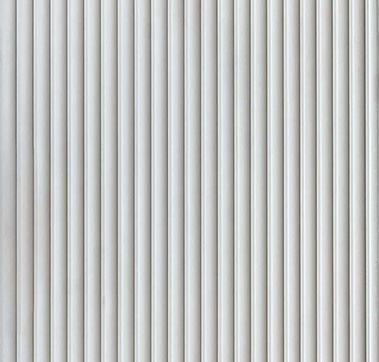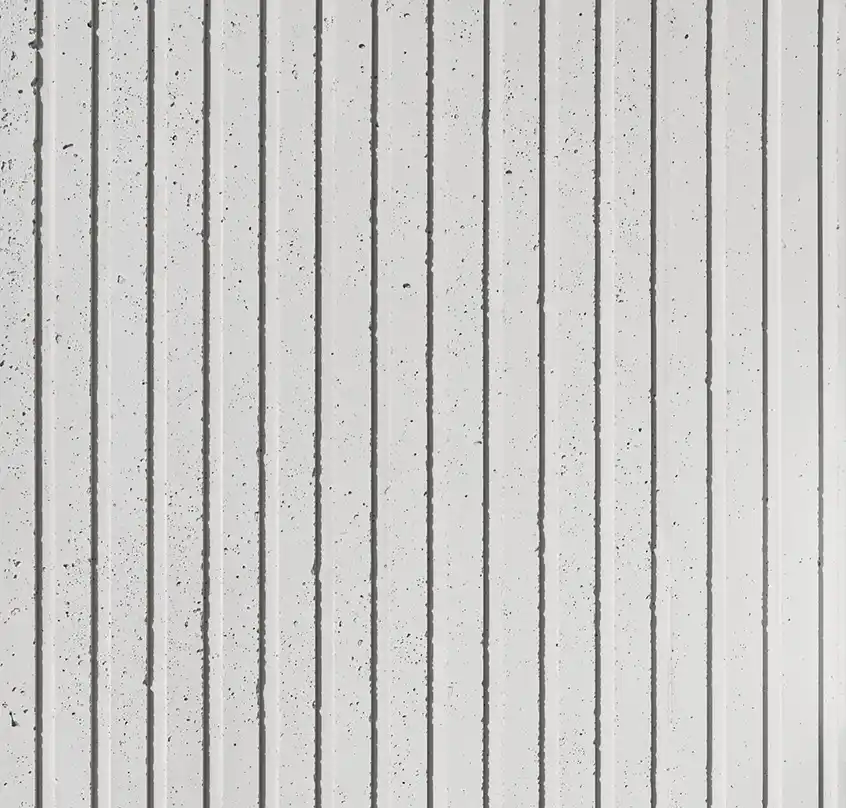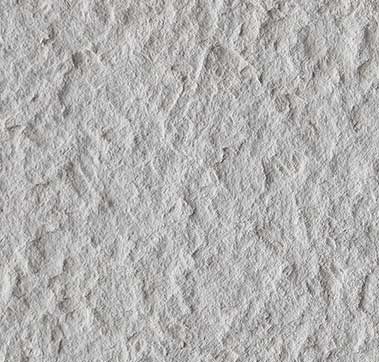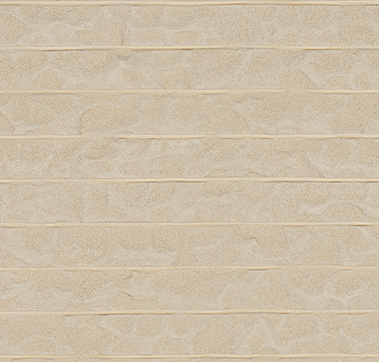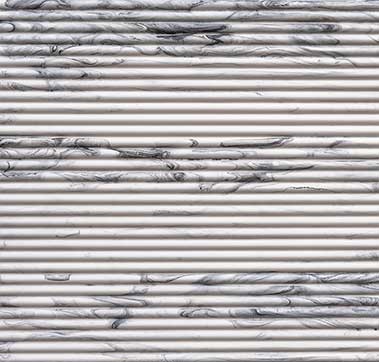

Stonini 3D wall panels are hand-cast in our Sydney factory from a mineral composite of gypsum, water-based resin, fibreglass mesh and inert fillers. The composition is non-combustible, water resistant and mould resistant.
Each panel is individually cast by hand rather than machine-pressed or injection-moulded. That gives every piece a slightly different texture — the variation is the point, and it is what separates a genuine cast panel from a vacuum-formed PVC imitation.
The range covers more than 40 profiles, from fine linear fluting to deep sculpted relief, in interior and exterior grades.
| Standard panel size | 1800 × 600 mm |
| Large format | 2700 × 600 mm and 2400 × 600 mm (selected profiles) |
| Thickness | 9–12 mm |
| Weight | Approx. 14 kg/m² |
| Material | Gypsum mineral composite, fibreglass reinforced |
| Fire rating (interior) | Group 1 — AS/NZS 3837:1998, assessed per AS 5637.1:2015 |
| Combustibility (exterior) | Non-combustible — AS 1530.1:1994 |
| Finish options | Bluestone or mica surface additive; any paint colour |
| Applications | Interior and exterior walls, ceilings, bar fronts, fireplace surrounds, facade cladding |
| Manufactured | Sydney, NSW, Australia |
Stonini 3D panels carry a Group 1 fire rating — the highest classification for wall and ceiling linings under the NCC. Tested by AWTA Product Testing (NATA-accredited) to AS/NZS 3837:1998, assessed per AS 5637.1:2015. Average specific extinction area: 11.9 m²/kg, well under the 250 m²/kg smoke limit for unsprinklered buildings.
Group 1 means the panels are accepted in all locations within all building classes (Class 2–9), including fire-isolated exits, public corridors, hospital patient care areas and theatre auditoriums — without a sprinkler concession.
For exterior and facade use, the panels are certified non-combustible under AS 1530.1:1994 (Ignis Labs, NATA-accredited): zero seconds of sustained flaming across all five specimens, mean mass loss 8.30%.
VOC emissions, tested by FORAY Laboratories to ASTM D5116:2025:
Compliant with Green Star Design & As Built V1.3 and Green Star Interiors V1.3.
Most products sold as “3D wall panels” in Australia are one of four materials. They are not interchangeable, and the difference matters most where building compliance applies.
| Stonini (cast mineral) | MDF | PVC | Foam / PE | |
|---|---|---|---|---|
| Fire rating (interior) | Group 1 (AS/NZS 3837) | Combustible | Combustible | Combustible |
| Non-combustible (AS 1530.1) | Yes | No | No | No |
| Exterior / facade use | Yes | No | Limited | No |
| Texture | Hand-cast, varies per panel | Routed, uniform | Vacuum-formed, uniform | Moulded, uniform |
| Typical weight | ~14 kg/m² | 15–20 kg/m² | Light | Very light |
| Made in Australia | Yes (Sydney) | Varies | Mostly imported | Mostly imported |
If a project has NCC fire requirements — commercial fit-outs, corridors, healthcare, education, multi-residential — MDF, PVC and foam panels are not compliant options regardless of appearance. That is the single practical reason to specify a cast mineral panel.
Beyond standard wall cladding, the range is specified for:
See completed installations in our project gallery.
Panels can be finished in any paint colour — Dulux, Taubmans, Resene or any manufacturer you specify. Two surface additives are available, bluestone and mica, both of which change how the panel catches light.
Custom profiles and non-standard dimensions are produced to order. If you need a specific panel size or a bespoke texture for a project, that is manufactured rather than selected from a catalogue.
Panels are cut on site with a tungsten-tipped blade and bonded with construction adhesive. Because the adhesive does the holding, the panel face stays clean — no fixings punched through the texture.
At 14 kg/m², panels install over existing plasterboard, brick or rendered substrates without structural reinforcement or engineering sign-off. The substrate needs to be flat and stable — significant irregularities should be levelled first, or you will get visible lippage at panel joins.
For feature walls with multiple corners, reveals or pattern alignment, use an experienced installer. See our 3D wall panel installation guide for the full process.
As a rough guide to the wider market, decorative panels typically run around $80–$150/m² for mid-range options and $150 to $400+/m² for premium architectural and custom finishes — well above budget PVC. Where a specific panel sits depends on its material, finish and whether it’s fire rated. For Stonini pricing, send us your wall area and profile and we’ll quote it.
For a specified interior, yes — a fire-rated feature wall usually costs less than the bespoke joinery or artwork it replaces, and it clears NCC compliance in one line rather than becoming a documentation problem later. On a commercial fit-out, the value is as much in sign-off certainty and lead time as in the finish itself.
Construction adhesive to the panel back, on a flat, clean, stable substrate. Mechanical fasteners aren’t used to hold the panel on a standard wall — a screw through the face damages the texture and has to be patched and repainted. Fasteners are only added where gravity or safety demands it, such as ceilings or high-traffic zones, and are placed to stay hidden.
Yes, using a fully embedded installation. The panel edges sit enclosed within a dedicated track, frame or slot rather than screwed flat or held by exposed brackets — the method used for laser-cut metal and composite screening. It conceals the raw edges and fixings and delivers a fully integrated architectural finish.
No. The panels are water resistant, but they are not built for running water or areas subject to frequent wetting, so they shouldn’t be used in showers or direct splash zones. They suit dry and humidity-exposed interiors, not wet areas.
Standard 1800 × 600 mm, with 2700 × 600 mm and 2400 × 600 mm floor-to-ceiling formats in selected profiles.
Panels are made to order in Sydney. Lead times are typically measured in weeks — contact us for current timing on your profile.
Photographs do not convey texture or true colour. Request a physical sample and view it in the actual space, under the actual lighting, alongside your other materials.
We also offer decorative concrete wall panels if that suits your project better.
Contact us or call (02) 9833 1157.